What captaincy means in FPL
Your captain scores double points in Fantasy Premier League. Pick the wrong player and a blank gameweek hurts twice as much. Pick right and you climb the ranks fast.
Captaincy is not about finding a hidden gem every week. Most managers captain a small pool of premium attackers with good fixtures. The hard part is choosing between two or three obvious options when ownership and form look similar on paper.
CrowdFPL adds a layer expert blogs rarely show: live crowd votes on head-to-head duels. You see what real managers pick right now, not what someone guessed yesterday. Start with how CrowdFPL works, then browse active duels before you lock your armband.
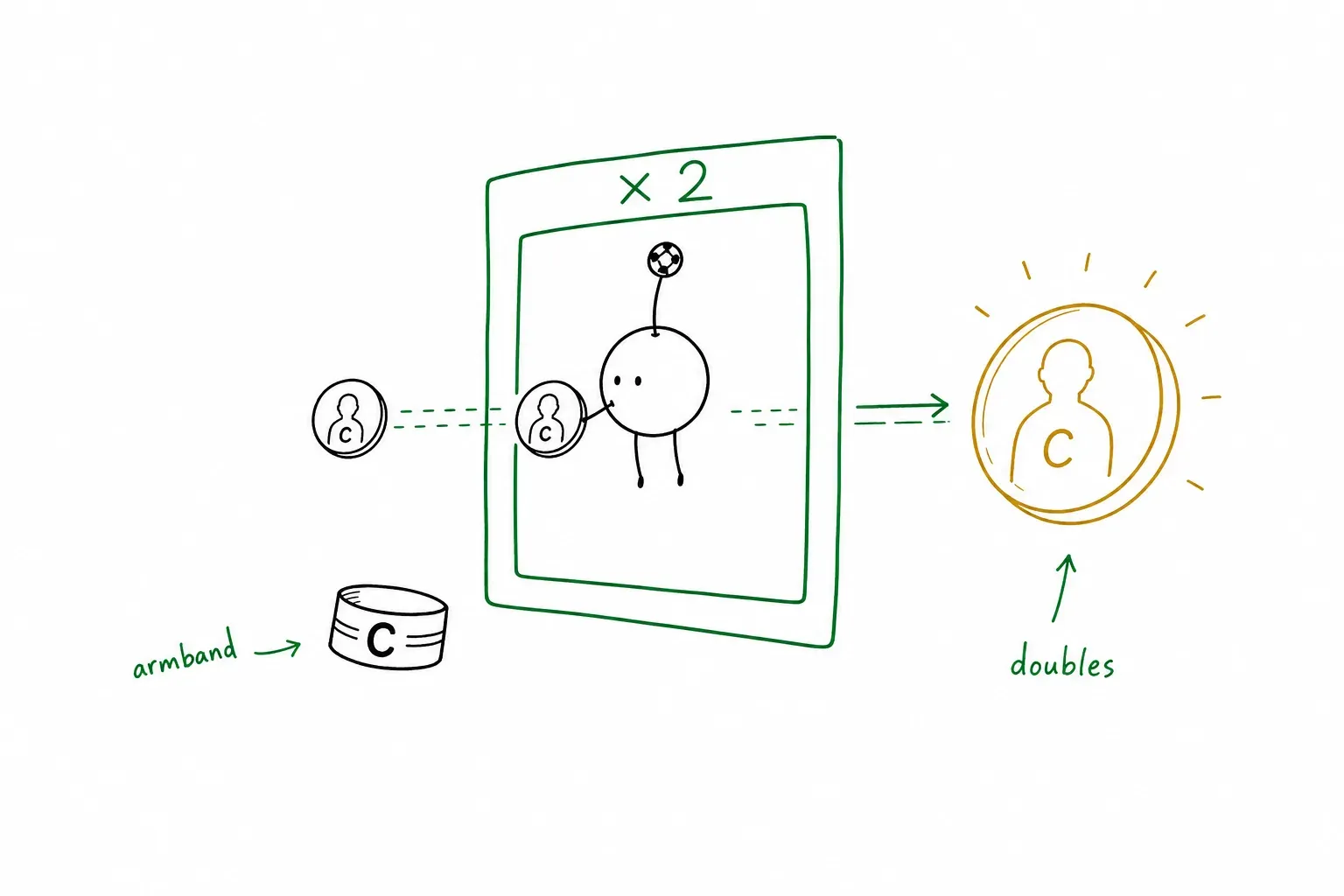
How to choose a captain
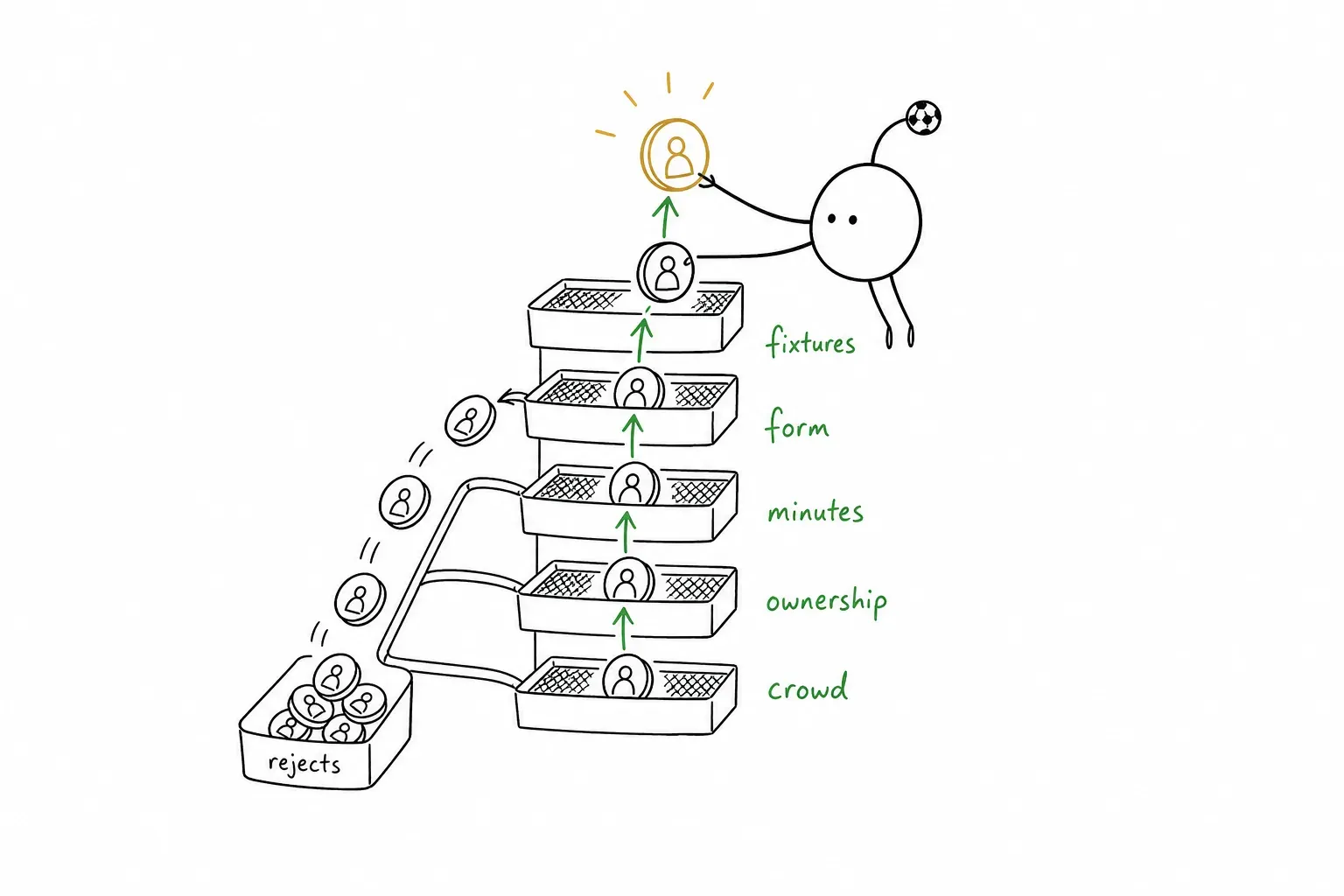
Use a simple checklist each gameweek:
- Fixtures — home games, weak defences, and teams that concede chances matter more than reputation.
- Form — recent shots, expected goals, and FPL returns over the last three to five matches.
- Minutes — a nailed-on starter beats a higher ceiling player who might come off at 60 minutes.
- Ownership — template captains are safer for rank protection; differentials need a clear edge.
- Crowd signal — when two options look close, compare crowd duels for the split.
There is no perfect formula. Strong fixtures plus good form plus high crowd support is a solid default. If the crowd heavily favours one side of a duel, that is useful context even when you disagree.
Reading underlying stats
Goals are noisy. Two players can score the same FPL points with very different quality of chances. Before you captain, glance at:
- Shots inside the box over the last four matches
- Expected goals (xG) and expected goal involvements
- Penalties and set pieces — who takes them when the usual taker is out
- Big chances created for playmakers who assist more than score
A striker outperforming xG may regress. A winger underperforming xG with easy fixtures ahead may be due a return. Underlying numbers do not replace fixtures or minutes, but they break ties.
Home vs away
Home captains historically outperform away captains in FPL because of crowd support, travel, and shorter rest for some away trips. That does not mean you never captain away: elite attackers at weak away fixtures still haul. Use home as a tiebreaker when two premiums look equal.
Ownership and rank strategy
In overall rank, template captains protect you from big red arrows when a popular player hauls. In mini-leagues, effective ownership matters: if rivals own Haaland as captain and you do not, you need a differential captain to catch up. Crowd splits on duels approximate where the active community leans before deadline.
Vice-captain hygiene
Set vice to a player who starts and shares similar upside to your captain. Avoid pairing captain and vice from the same match if both need goals to return. If your captain is an injury doubt, swap armband early or accept vice activation.
Fixture weighting
Mid-table sides with poor defensive records often produce more captain returns than a star away at a top-six club. Check goal conceded trends, not just league position.
Form vs regression
A player on a hot streak can keep delivering, but xG underperformance or overperformance eventually evens out. Blend eye test, underlying stats, and crowd sentiment rather than chasing last week’s haul alone.
Triple Captain — when to use it
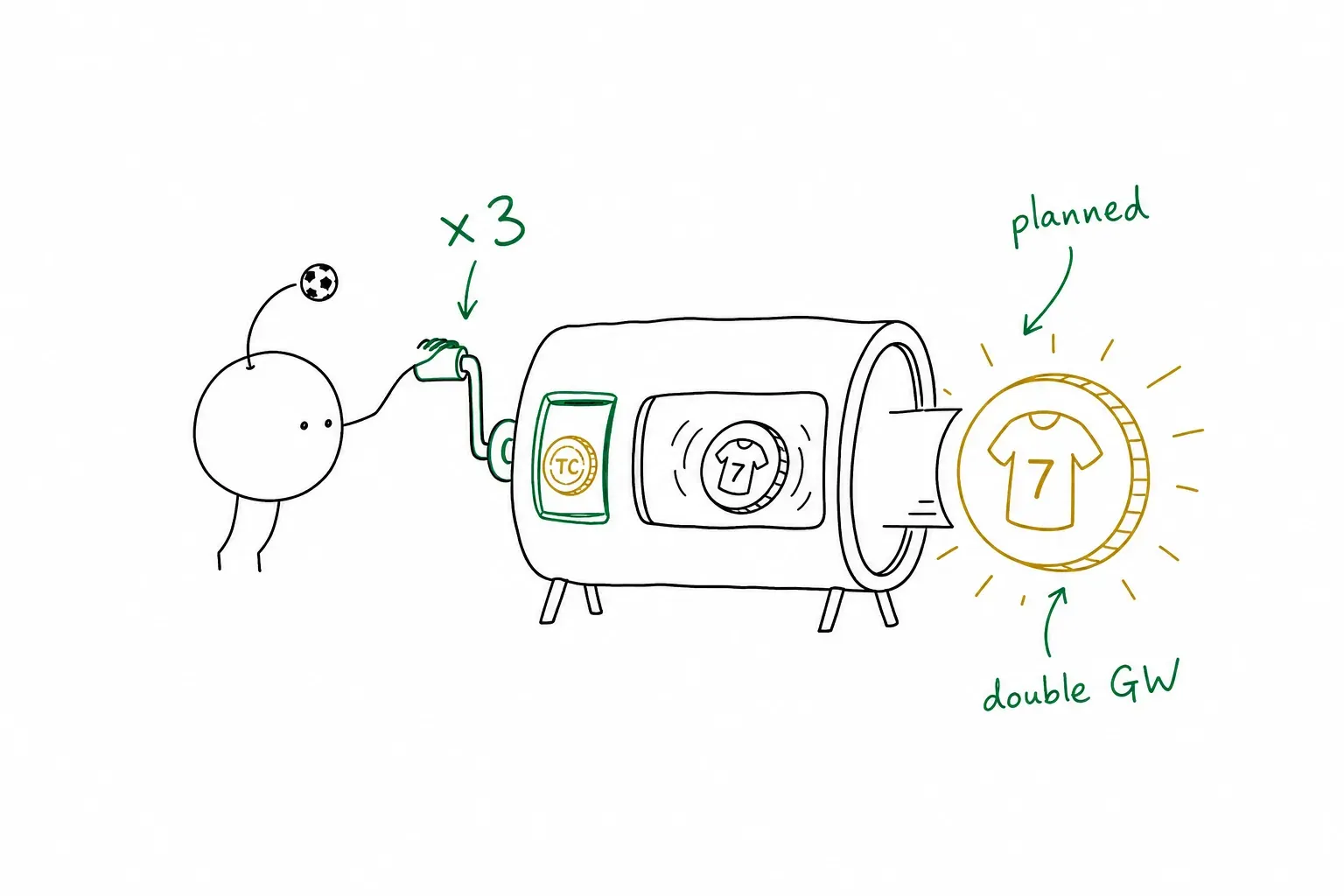
The Triple Captain chip triples your captain’s score twice per season. Most managers save it for a double gameweek or a blockbuster home fixture for a premium.
Good candidates:
- Double gameweek with two favourable matches
- Elite attacker at home to a bottom-half side
- Player with penalties and set pieces when teammates are injured
Poor candidates:
- Single gameweek punt on a medium-priced mid
- Differential with low crowd support and no double
- Using the chip because you forgot earlier in the season
Planning around blanks and doubles
Before you chip, scan the calendar for double gameweeks where your captain plays twice. Triple Captain on a double is the classic play when fixtures align. Avoid Triple Captain on a blank gameweek unless rules force a one-off punt.
Track team news in the week leading up to the chip. An injury to a strike partner can boost or wreck a captain’s ceiling.
We will expand chip strategy in a dedicated chips pillar. For now, treat Triple Captain as a planned event, not a panic button.
Captaincy by player type
Premium forwards — default captains most weeks. Highest ceiling, penalties, and most minutes in the box.
Attacking mids — excellent when playing behind a striker or taking set pieces. Watch rotation in European weeks.
Defenders — low ceiling unless they take corners, penalties, and play for a clean-sheet favourite at home.
Goalkeepers — almost never captain unless save points and clean sheet odds align with a very soft attack (rare).
When choosing between two premiums, crowd duels often mirror the template debate. Use crowd rating for wider sentiment beyond a single matchup.
Weekly captaincy workflow
A repeatable Thursday/Friday routine:
- List two or three captain candidates from fixtures and form.
- Check injuries and press conferences.
- Open CrowdFPL duels for the gameweek’s top matchups.
- Compare crowd splits; note shifts since Wednesday.
- Lock captain, set vice, confirm bench order for auto-subs.
Revisit once before deadline if line-up leaks drop. Crowd numbers move when confirmed teams appear.
What the crowd picks this week
The block below pulls live crowd duels for the current gameweek. Numbers update as managers vote. This is the core CrowdFPL edge: aggregated choices from the community, not a single pundit opinion.
You can also drill into a specific matchup when duels are live:
B.Fernandes vs Haaland
43% · 57% (7 votes)
When a duel is close, the split tells you the community is split. When one player leads 70% or more, most active voters see that player as the safer captain pick.
Explore more matchups on the duels hub or check crowd ratings for wider ownership and sentiment outside head-to-head votes.
Common captaincy mistakes
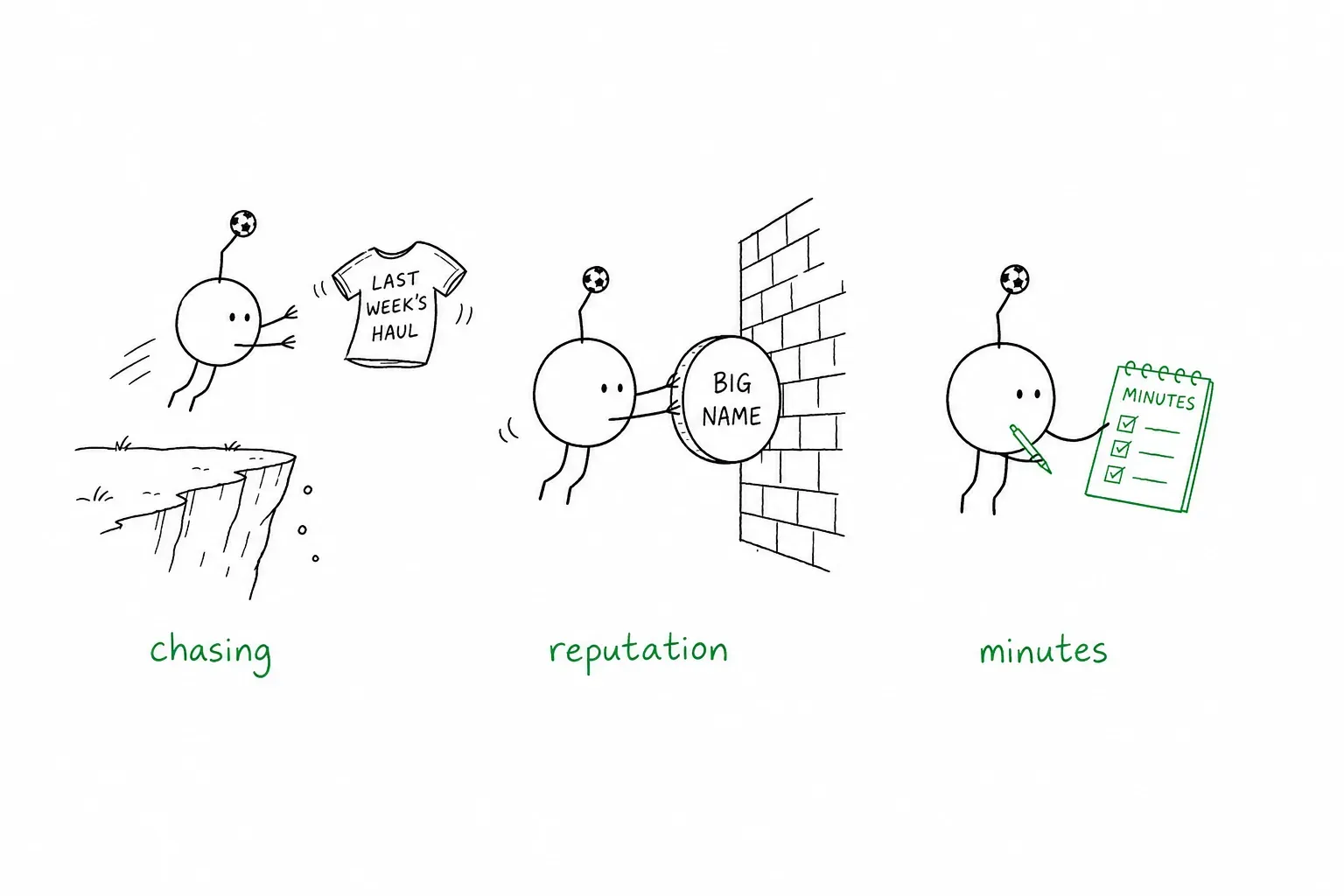
Chasing last week’s points. A haul does not guarantee a repeat. Fixtures change every gameweek.
Ignoring minutes risk. Rotation and early subs destroy captain returns. Check press conferences and recent substitution patterns.
Captaincy by reputation only. Big names with tough away trips lose to in-form mids at home every season.
Going differential without a reason. Low-ownership captains need a story: double gameweek, penalty taker, or a fixture swing the template misses.
Ignoring the crowd when stuck. If you cannot decide between two options, see how other managers vote. It is not a command, but it breaks ties.
Forgetting bench order. Your vice-captain activates if your captain does not play. Set vice to the next safest starter.
Captaincy and chip planning
Captain choice interacts with Wildcard, Free Hit, and Bench Boost weeks. On a Wildcard week you might rebuild around a double gameweek captain. On Bench Boost, captaincy still doubles only one player; do not confuse bench points with captain multiplier.
Map blank and double gameweeks at season start. Note which premiums have doubles and when your team might bench key assets. Captaincy errors on blank weeks hurt less if your captain blanked with the rest of the template; on double weeks missing the right captain is costly.
Press conferences and late news
Managers often finalize captain Friday after press conferences. A late fitness doubt can flip a 60/40 crowd split overnight. If your captain is flagged doubtful, monitor news and re-open crowd duels before deadline. CrowdFPL splits react when active voters change picks.
Avoid captaining players with opaque knocks or rotation quotes from the manager. Reliability beats ceiling when the armband doubles the blank.
Sample decision framework
When Player A and Player B both look viable:
- Compare fixtures (home, defensive stats, recent goals conceded).
- Compare minutes (starts, sub patterns, European midweek).
- Compare underlying stats (xG, shots, big chances).
- Compare template risk (ownership, effective ownership in mini-leagues).
- Compare crowd split on the relevant duel.
If steps 1–4 tie, let step 5 break the deadlock. If the crowd strongly disagrees with your lean, document why you differ before you commit. Contrarian captains can win weeks; they can also end them.
Season-long mindset
One bad captain week rarely ruins a season. Chasing hits every gameweek leads to inconsistent differentials. Most top ranks combine mostly template captains with a few well-timed pivots.
Track your captain returns monthly. If you consistently captain players who underperform xG, tighten fixture filtering. If you mirror the crowd every week, ask whether you add information or copy consensus without thinking.
Use this pillar as reference, the weekly GW captain posts for time-sensitive splits, and CrowdFPL duels when you want live numbers before lock.
Fixture swings and template captains
Early season fixture swings move captaincy from one premium to another. After international breaks, minutes and roles shift. Re-rank your captain shortlist when:
- A promoted side concedes heavily and faces a premium at home
- A title contender rotates after a midweek cup loss
- Penalty duties change due to injury
Template captains exist because they combine ceiling with reasonable floor. When two templates clash in a duel, the crowd split often lands near 55/45. That is informational: the community sees both as viable.
Communicating your pick
Many managers discuss captaincy in league chats. Sharing your pick before deadline is optional. What matters is whether your process is repeatable. CrowdFPL gives you a screenshot-friendly data point: live percentages on duels you can link in chat without claiming expert authority.
If you recommend a captain to friends, point them to the duel and the data source line on this page. Transparency builds trust and matches E-E-A-T expectations for content that cites community votes.
Quick reference checklist
Before deadline, confirm:
- Captain and vice both likely to start
- No last-minute flag without a plan B
- Fixtures still favourable after team news
- Crowd duel checked if you were undecided
- Bench order set for auto-sub priority
Save this page and return each gameweek. Update bookmarks when we publish the latest GW captain picks posts for time-sensitive splits.
When stats and crowd disagree
Sometimes underlying stats favour Player A while the crowd backs Player B. That usually means the crowd weighs ownership, eye test, or news you missed. Pause and find the reason before you auto-follow or auto-fade the crowd.
Examples: a striker with strong xG but a new injury doubt; a mid with mediocre xG but penalties and a double gameweek coming. The duel split encodes that debate. Your job is to decide which side you trust more this week, not to treat 58% as proof.
Document one sentence why you picked your captain. Over a season those notes improve your process more than copying any single data point.
FAQ
Should I captain a differential?
Only when you accept rank risk. Differentials can jump you up the standings or drop you hard. Check whether crowd duels support your pick. If the crowd backs the template, a differential needs strong fixtures and form to justify the gamble.
Is it worth captaining a defender?
Rarely. Clean sheets and goal involvements for defenders are lower ceiling than premium attackers. Captain a defender only with exceptional set-piece threat, penalties, and a very strong home fixture, and even then most managers prefer an attacker.
How late can I change my captain?
You can change captain until the gameweek deadline. Crowd splits shift most on Thursday and Friday before deadline. Re-check live duels close to lock if news breaks.
Does crowd vote mean the crowd is always right?
No. Crowd data shows consensus, not truth. Use it as one input alongside fixtures, form, and your team structure.
Where do crowd numbers come from?
CrowdFPL aggregates human votes on head-to-head duels and related product data. See the data source line on this page for attribution.