Your captain scores double points in Fantasy Premier League, so the armband is the single biggest weekly decision you make. To pick your FPL captain, rank two or three premium attackers by fixture, recent form, and guaranteed minutes, then break the tie with ownership and the live crowd vote. The goal is not to find a genius pick every week. It is to make a repeatable decision that protects your rank and occasionally wins you the gameweek.
This guide gives you a process you can run in five minutes before every deadline. For the wider picture on what captaincy is and how Triple Captain works, start with the FPL captaincy guide. New to the platform? See how CrowdFPL works first.
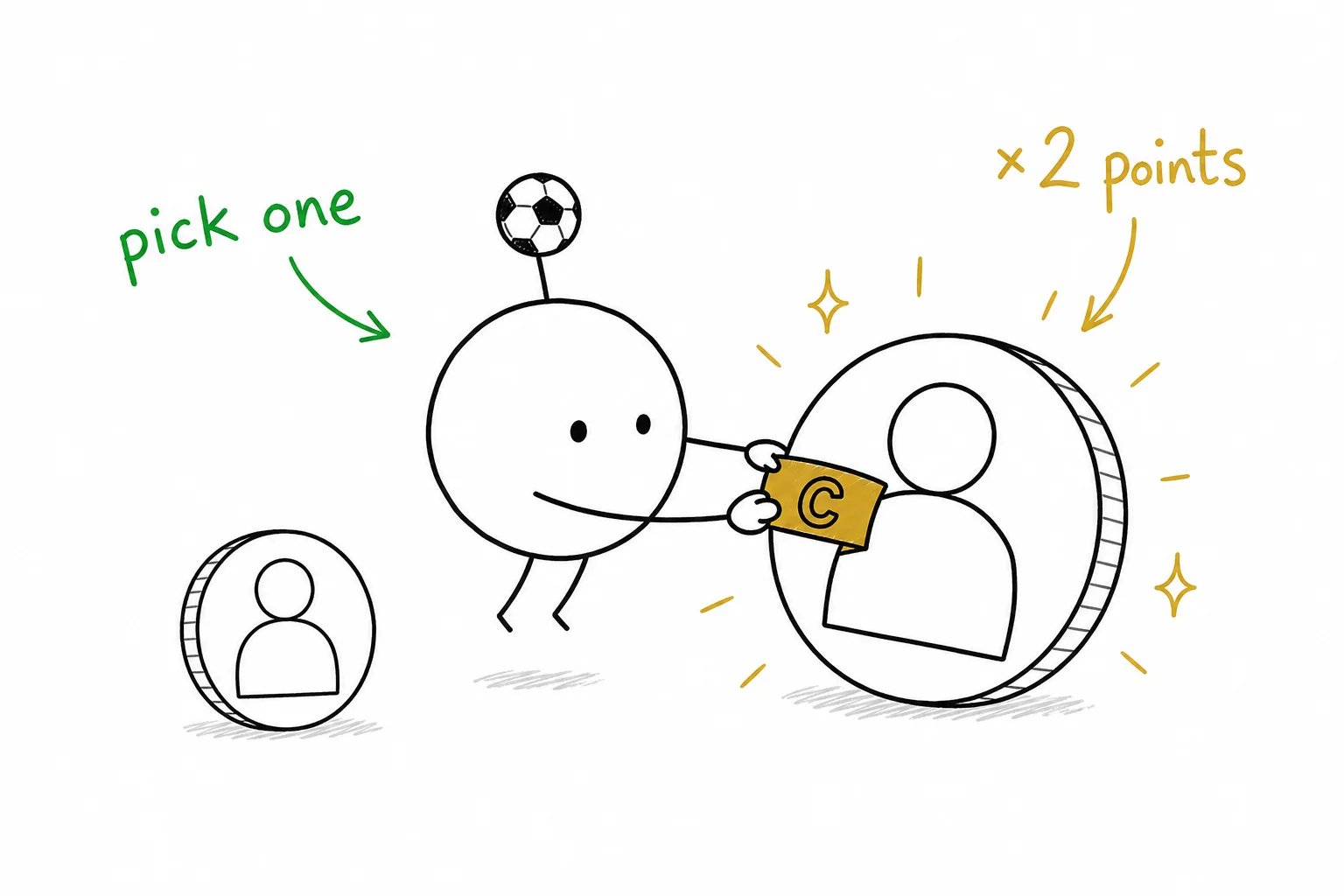
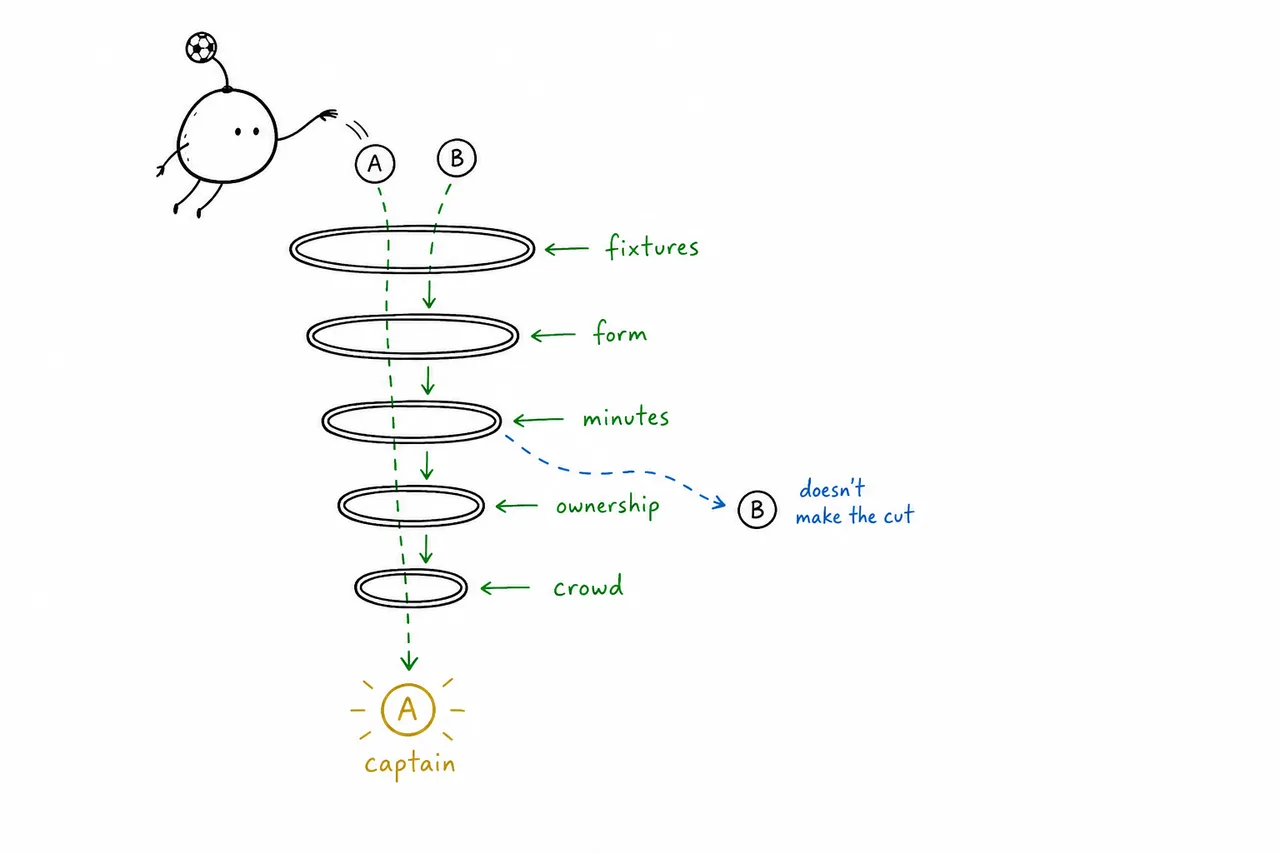
The five-factor captain checklist
Most strong captain picks pass the same five checks. Run them in order and stop guessing.
- Fixtures. Home games, weak or leaky defences, and opponents who concede chances matter more than a club's reputation. A mid-table side with a poor defensive record often hands out more captain returns than a star away at a top-six club.
- Form. Look at shots, expected goals, and actual FPL returns over the last three to five matches, not just the most recent haul.
- Minutes. A nailed starter beats a higher-ceiling player who might come off after 60 minutes. Rotation and early subs quietly kill captain scores.
- Ownership. High-owned template captains protect your overall rank. Low-owned differentials can move you up a mini-league, but only with a clear reason.
- Crowd signal. When two options still look level, the live split from real managers breaks the deadlock better than a coin flip.
If one player passes all five, you have your captain. The hard weeks are when two players split the checklist, which is where a framework helps.
One factor deserves extra weight: where the match is played. Home captains have historically outscored away captains in FPL, helped by familiar conditions, crowd support, and shorter travel. It is not a rule that you never captain away, because elite attackers still haul at weak away grounds. Treat home advantage as a tie-breaker when two premiums look otherwise equal.
How many candidates should you shortlist?
Keep your shortlist to two or three names. One option means you are not really choosing, and you may miss an obvious fixture. More than three usually means you are overthinking it and will end up chasing last week's points. A tight shortlist makes every other step in this guide faster, because you only compare players who already passed the fixture and minutes filters.
A simple captain decision framework
When Player A and Player B both look viable, compare them on one factor at a time and let the first clear edge decide.
- Compare fixtures. Home versus away, opponent defensive stats, recent goals conceded. Clear edge? Captain that player.
- Compare minutes. Starts, substitution patterns, midweek European games. A 90-minute lock beats a rotation risk.
- Compare underlying stats. Expected goals, shots in the box, big chances, penalty and set-piece duty.
- Compare template risk. Effective ownership in your mini-leagues. If a rival captains a player you do not own, you carry hidden risk.
- Compare the crowd split. Open the duel and read where active managers land before the deadline.
If steps 1 to 4 tie, let step 5 decide. If the crowd strongly disagrees with your lean, write one sentence explaining why you differ before you commit. Contrarian captains can win weeks and they can also end them.
Template captain vs differential captain
The biggest captaincy fork is whether to follow the crowd or go against it. Neither is always right. It depends on your rank goal.
| Factor | Template captain | Differential captain |
|---|---|---|
| Ownership | High (often 30%+) | Low (usually under 10%) |
| Best for | Protecting overall rank | Chasing mini-league rank |
| Risk if they blank | Low (most rivals blank too) | High (you fall behind alone) |
| Reward if they haul | Keeps pace with the field | Big jump up the standings |
| When to use | Default most weeks | When you need to make up ground |
A template captain keeps you level with the field when a popular player hauls. A differential only makes sense when you have a real edge: a double gameweek, a penalty taker against a weak defence, or a fixture swing the template has not priced in yet. For a deeper look at this trade-off, see template captain vs differential captain and FPL captain differentials.
Use the crowd as a tie-breaker
Editorial blogs publish one writer's opinion. CrowdFPL shows what thousands of real managers are actually choosing right now, in head-to-head duels. That is the difference between a guess and a signal.
The block below pulls the live crowd captain split for the current gameweek. Numbers update as managers vote.
Read the split like this:
- Close to 50/50 means the community is genuinely undecided, so trust your own checklist.
- One player above 70% means most active voters see that player as the safer captain. Going against it is a real differential play, not a tie-break.
- A split that shifts on Friday usually means team news or a press conference moved sentiment. Re-check before you lock.
The crowd is not always right. It shows consensus, not truth. Use it as one input alongside fixtures, form, and your squad structure. For wider sentiment beyond a single matchup, check crowd ratings.
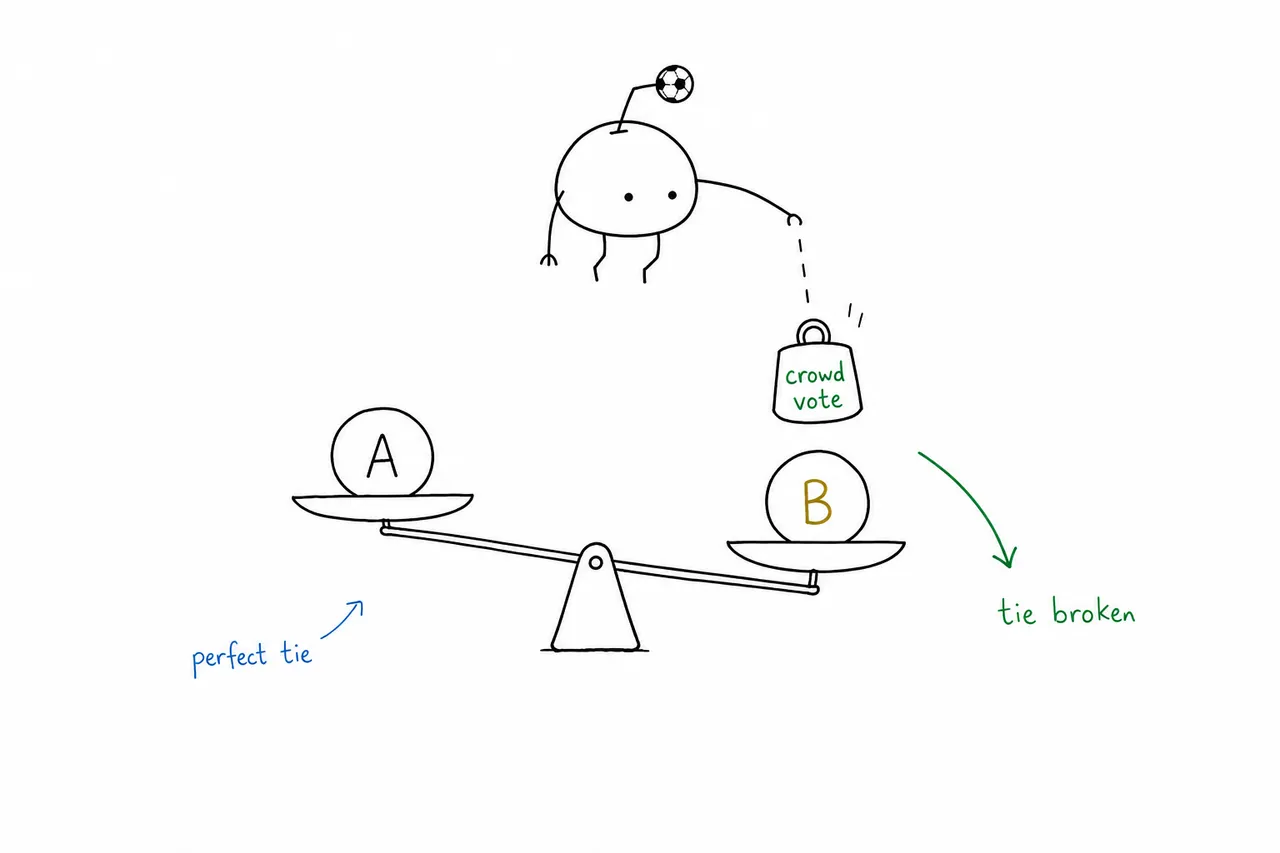
When the stats and the crowd disagree
Sometimes your underlying numbers favour Player A while the crowd backs Player B. That gap is information, not noise. It usually means the community is weighing something your spreadsheet missed: a fresh injury doubt, a penalty change, a double gameweek on the horizon, or simple eye-test confidence.
When that happens, do not auto-follow the crowd and do not auto-fade it either. Find the reason for the disagreement first. If the crowd knows about a flagged striker you overlooked, update your pick. If the gap is just recency bias after one big haul, trust your process. The split encodes a real debate between active managers, and your job is to decide which side you trust more this week, not to treat 58% as proof.
Common captaincy mistakes to avoid
- Chasing last week's points. A haul does not guarantee a repeat. Fixtures change every week.
- Captaining by reputation. Big names at tough away grounds lose to in-form players at home every season.
- Ignoring minutes risk. A flagged or rotated player wastes the armband. Reliability beats ceiling.
- Going differential with no reason. A low-owned captain needs a story: a double, a penalty, or a fixture the template missed.
- Forgetting the vice-captain. Set vice to a likely starter with similar upside. The vice takes over only if your captain plays zero minutes.
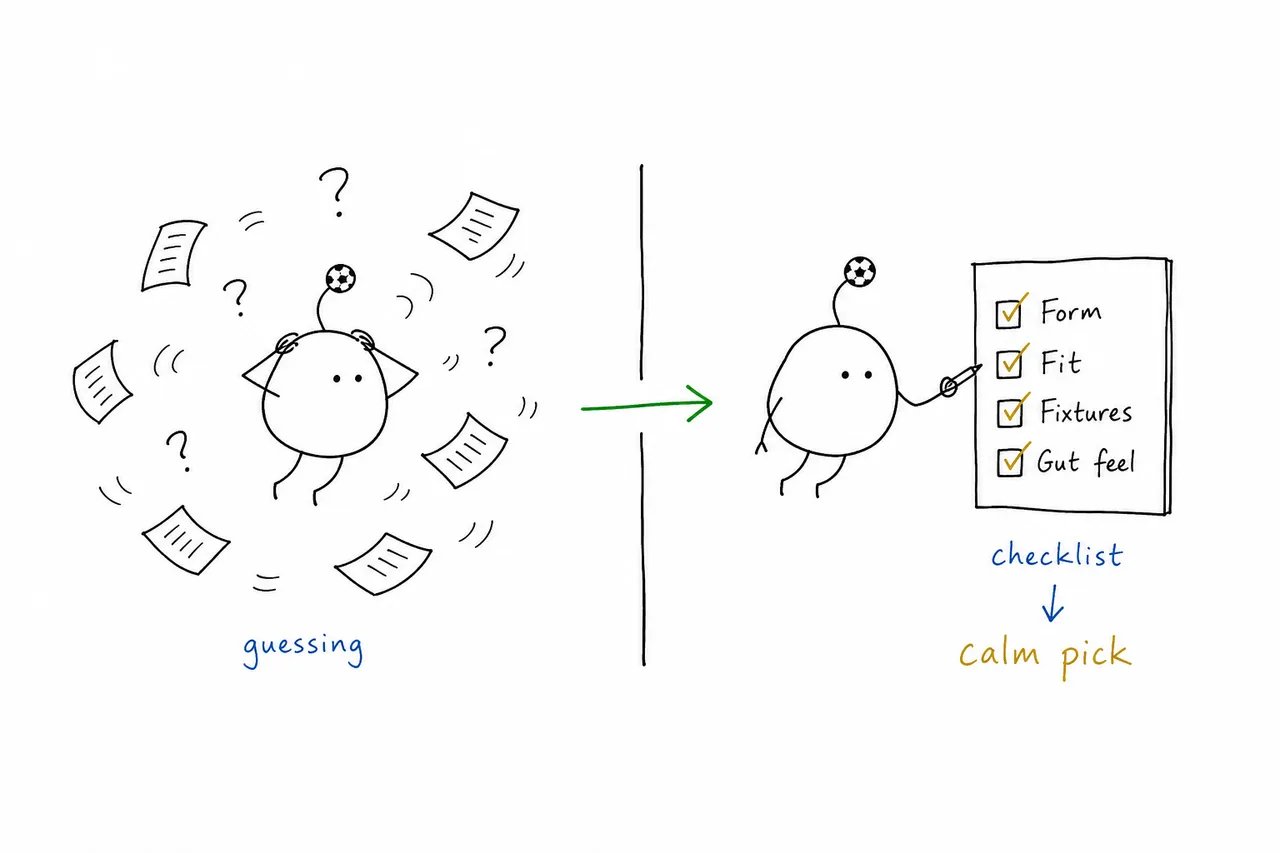
Build a weekly captaincy routine
A repeatable Thursday or Friday routine removes most captaincy stress:
- List two or three candidates from fixtures and form.
- Check injuries, press conferences, and rotation risk.
- Open CrowdFPL duels for the gameweek's top matchups.
- Compare the crowd splits and note any shift since midweek.
- Lock your captain, set vice, and confirm bench order for auto-subs.
Revisit once more if line-ups leak before the deadline. Crowd numbers move when confirmed teams appear, and a late doubt can flip a 60/40 split overnight.
Track your captain returns monthly. If you keep captaining players who underperform their expected goals, tighten your fixture filter. If you mirror the crowd every single week, ask whether you are adding information or just copying consensus.
FAQ
How do I choose my FPL captain each week?
Shortlist two or three premium attackers with good fixtures, then rank them by form, guaranteed minutes, and ownership. If two are still level, open the crowd duel and let the live vote split break the tie.
Should I always captain the highest-owned player?
Not always, but it is the safe default for protecting overall rank. The template captain keeps you level with the field when a popular player hauls. Only go differential when you have a clear edge and you accept the rank risk.
Is it worth captaining a differential?
Only when you need to gain ground and you have a real reason: a double gameweek, penalty duty, or a strong fixture the template has not caught up to. Check whether the crowd split supports your pick before you commit.
How late can I change my captain?
Up to the gameweek deadline. Crowd splits move most on Thursday and Friday as team news lands, so re-check live duels close to lock if anything changes.
Does the crowd vote mean the crowd is always right?
No. The crowd shows consensus among active managers, not certainty. Use it as a tie-breaker alongside fixtures, form, and your own squad, not as a command.